 Competition coffee
 Subscription

The Ultimate Guide to Decaf Coffee: Everything You Need to Know About the Process and the Best Varieties
What is decaffeinated coffee?
Decaffeinated coffee is an ideal alternative for coffee lovers who want to enjoy the aromas and flavors without the stimulating effects of caffeine. Contrary to popular belief, the quality of a good decaffeinated coffee is not compromised by the decaffeination process. In addition, it offers health benefits, including a reduced risk of sleep disorders and a decrease in stomach acidity.
Why Choose a Specialty Decaf Coffee?
This decaffeinated specialty coffee is carefully selected to provide an optimal sensory experience, even without caffeine. It is roasted with precision to preserve its aromatic notes, making it a top choice for discerning coffee lovers.
How Is Coffee Decaffeinated?
There are several techniques for removing caffeine while preserving the natural flavors of Whole Beans. Here are the main methods used in the specialty coffee industry:
1. Water Decaffeination (Swiss Water Process)
This natural method relies on a hot water bath combined with activated carbon filters to extract the caffeine. The Whole Beans are immersed in pure water, which naturally dissolves the caffeine as well as other soluble compounds. The water containing these substances then passes through activated carbon filters that retain only the caffeine. The water is then reintroduced to the Whole Beans allow them to reabsorb the essential oils and aromatic compounds, while being completely caffeine-free.
The main advantage of this method is that it uses no chemicals and preserves the coffee’s original flavor. It is widely used for high-quality coffees and allows for gentle decaffeination that respects the original coffee’s flavor profile.
2. The Ethyl Acetate Method (Sugar Cane Decaf)
This technique uses a natural solvent derived from sugarcane, ethyl acetate, which occurs naturally in certain fruits. The process begins by soaking the Whole Beans hot water to open their pores and facilitate caffeine extraction. They are then placed in a solution containing ethyl acetate, which binds to the caffeine and dissolves it without affecting the coffee’s other aromatic components.
After several washing cycles, the Whole Beans dried to restore their natural moisture content before roasting. This method is particularly valued for its eco-friendly nature and the fact that it uses a naturally derived solvent. It is especially popular for decaffeinated coffees from South America.
3. Supercritical CO2 Decaffeination
Supercritical carbon dioxide (in a state between liquid and gas) is used to extract caffeine. This method begins by placing Whole Beans green Whole Beans in a pressurized chamber, where high-pressure CO2 is injected. Under these conditions, the CO2 acts as a natural solvent, capturing the caffeine while leaving the other aromatic compounds intact.
The caffeine-infused CO2 is then filtered to remove the caffeine before being recycled for reuse. This technique is considered one of the most efficient and environmentally friendly methods. However, it requires expensive equipment and is therefore used only for very high-quality coffees.
4. Decaffeination Using Chemical Solvents
Chemical solvents such as dichloromethane are sometimes used to extract caffeine. In this process, the Whole Beans first steamed to open their pores. They are then immersed in a bath containing the solvent, which binds to the caffeine and extracts it from the Whole Beans. Once the caffeine has been removed, the Whole Beans thoroughly rinsed to eliminate all traces of the solvent before being dried.
This method is widely used in the coffee industry because of its low cost and efficiency, but it is often avoided in the specialty coffee sector due to concerns about chemical residues and its impact on the coffee’s flavor profile.
Conclusion
Decaffeinated coffee is not an inferior alternative to regular coffee. When chosen carefully, it offers a rich sensory experience without the effects of caffeine. Whether for health reasons or personal preference, choosing a specialty decaffeinated coffee guarantees optimal quality and undiminished enjoyment.
Our regular decaf
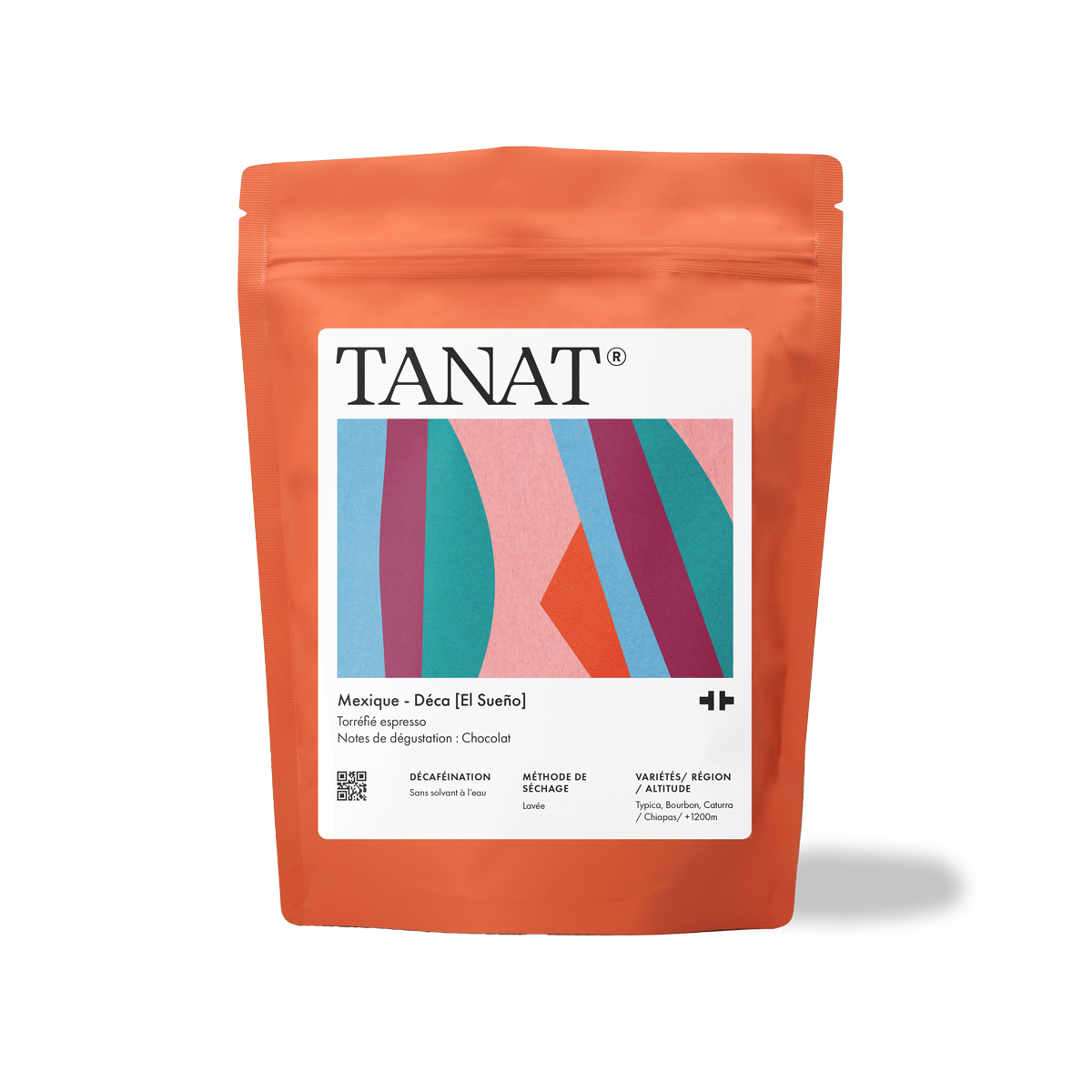
Decaf [El Sueño]
Method:Water-based, solvent-free
Varieties:Typica, Bourbon, and Caturra
Located in southwesternMexico, the Chiapas region was part of Guatemala prior to 1824. Its varied terrain includes coastal areas, valleys, mountains, and tropical forests. It is one ofMexico’s most important agricultural regions. It benefits fromexceptionalbioclimatic conditions that have allowed it to develop a rich and diverse agricultural sector on nearly20%of its land. The main crops of Chiapas are coffee, bananas, cacao, corn, and mangoes, as well as honey, sugarcane, and chili peppers.
This region is renowned for its cocoa. Chiapas is also home to numerous indigenous communities: the Maya, Tseltal, Tzotzil, Ch’ol, Tojol-ab, and others. Coffee plantations are mostlyfamily-run, and there is a growing number ofsolidarity-based cooperatives. In short, it is a region extremely rich in culinary, cultural, and geographic diversity.