 Competition coffee
 Subscription

The Importance of Cupping in the World of Specialty Coffee
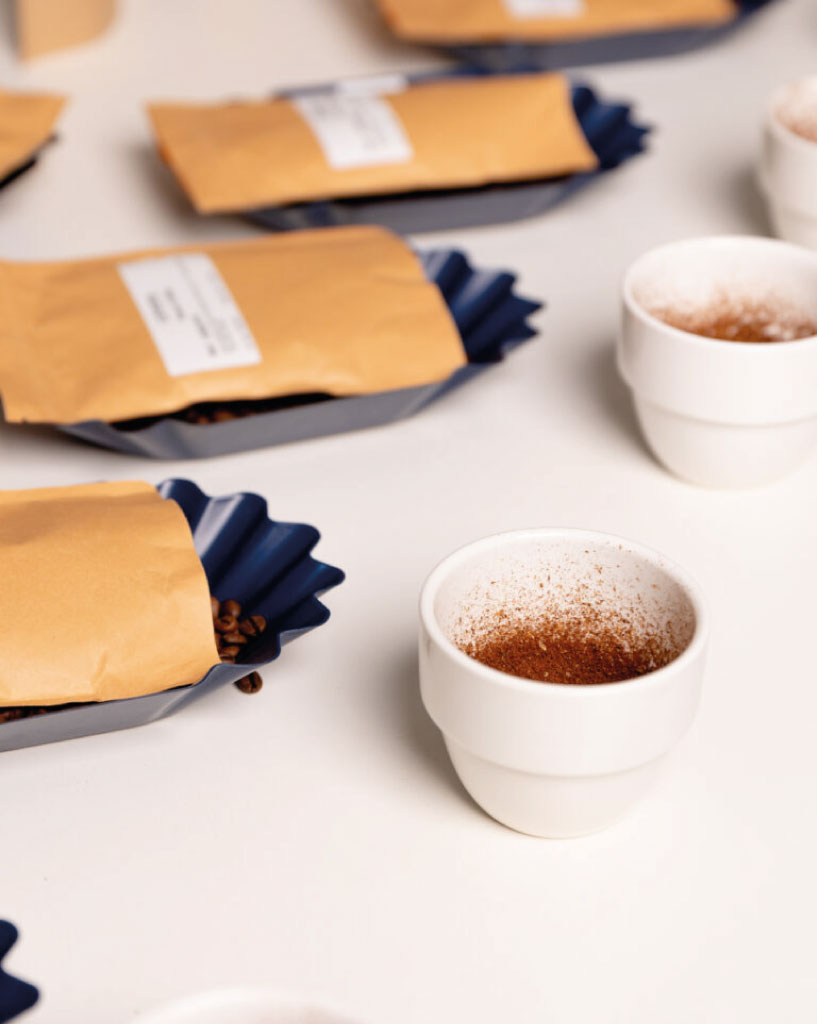
Cupping, or professional coffee tasting, is an essential practice in the world of specialty coffee. This standardized method allows for the objective evaluation of a coffee’s sensory characteristics, ensuring rigorous quality control throughout the production chain.
What is cupping?
Cupping is a tasting technique used to analyze a coffee’s aromas, flavors, acidity, body, and aftertaste. This method is used by producers, importers, roasters, and baristas to select the best lots, adjust roast profiles, and ensure an optimal tasting experience for consumers.
The cupping process
This process begins with the preparation of samples, in which Whole Beans are ground to a specific particle size and then placed in bowls. Next,hot water, typically around 93°C, is poured over Whole Beans . The Whole Beans for about 4 minutes, forming a crust on the surface. After steeping, this crust is gently broken with a spoon to release the aromas, which are immediately sniffed to assess the initial aromatic notes. Once the crust is removed, the coffee is tasted by drawing a small amount of liquid into the mouth with a rounded spoon. This allows the coffee to be distributed evenly in the mouth and all its nuances to be perceived. The tasters then note the coffee’s various flavor and aroma characteristics.
The Importance of Cupping for Professionals
Cupping is an essential step for roasters to better understand coffee. Take espresso, for example: it’s crucial to understand that a cupping session often involves tasting more than five different coffees (and that’s the bare minimum). In fact, after just—let’s say—five espressos, the palate would quickly become overwhelmed. Brewing the ground coffee preserves the palate’s sensitivity and precision. This process thus makes it better able to assess the quality of the aromas over time.
Unlike extraction methods such as espresso or Filter, which can be affected by factors such as over-extraction or under-extraction, cupping provides a more consistent and uniform assessment. This is essential for rigorous quality control that is understandable to all stakeholders in the production chain.
It is important to distinguish between cupping and traditional tasting in the world of specialty coffee. Cupping involves evaluating coffee in its ground form, with particles suspended in the cup. Traditional tasting, on the other hand, focuses on evaluating the coffee once it has been brewed, without any Whole Beans residue. This distinction allows for the analysis of coffee from different perspectives. It helps ensure optimal quality throughout the production chain.
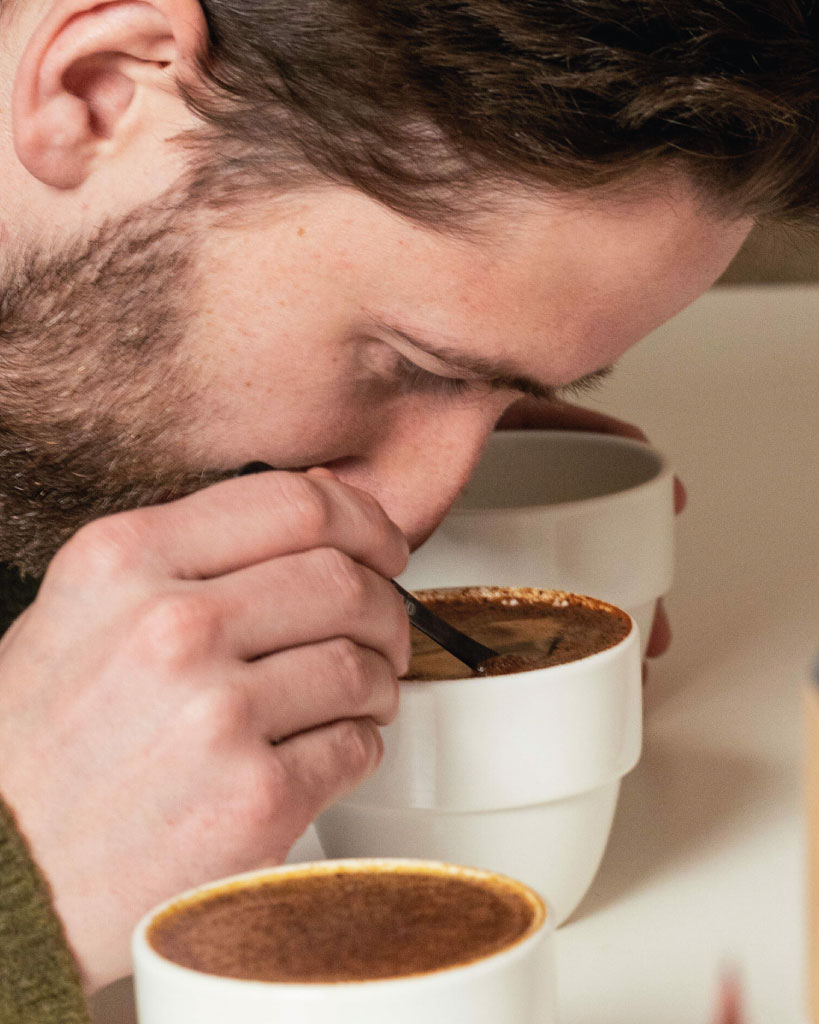
A regulated and standardized process
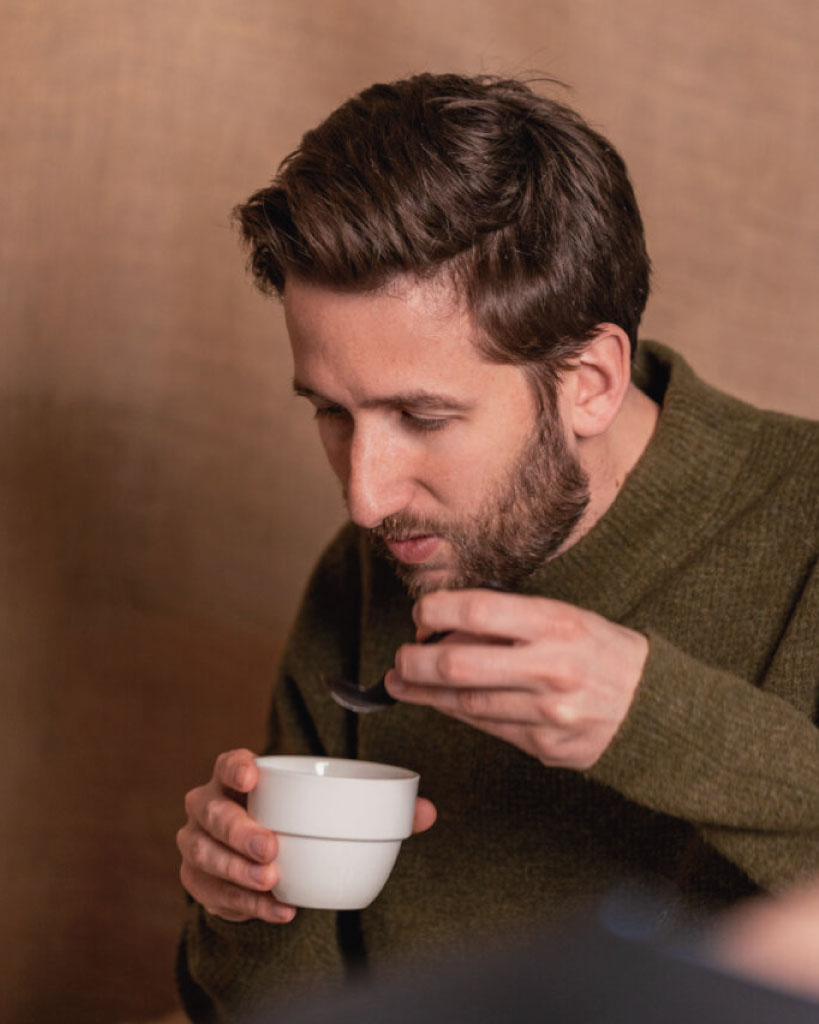
Strict regulations
Cupping is often compared to wine tasting. It is a strictly regulated and standardized process in terms of Grind Type, ratios, extraction time, and the equipment used. This standardization is essential because it ensures consistent quality control that is understandable and accepted by all. Cupping is an international rating system and a universal language in the coffee world. It facilitates communication among the various players in the coffee industry, providing common benchmarks for evaluating Whole Beans.
Compare to make a better assessment
Comparison is a key element of cupping. It involves comparing coffees in various contexts (terroir, extraction method) to analyze differences in quality and sensory characteristics. For example, although certain terroirs are renowned—such as those of Burundi or Rwanda—a roaster cannot rely solely on origin to evaluate a coffee. For example, the “Potato Taste Defect,” which is detectable only by taste, illustrates this need for comparison. This disease affects coffee cherries and remains nearly undetectable when the Whole Beans still green. However, it becomes noticeable after roasting and fully manifests in the taste once the Whole Beans and brewed.
Cupping is also about training the senses—a skill acquired through experience and practice. The Specialty Coffee Association (SCA) promotes this expertise by certifying Q-Graders, professionals whose cupping skills are recognized. These experts are qualified to evaluate and score the coffees they taste. Knowing how to cup means being able to distinguish the subtleties between a coffee rated +75 and another rated +92. It also means understanding the reasons behind these differences in quality. At Tanat, this expertise is embodied by one of our co-founders, Alexis Gagnaire, a certified Q-Grader, who personally oversees the cupping of all our coffees.
That is why cupping is essential for every roaster and enriching for the entire industry, from baristas to consumers.